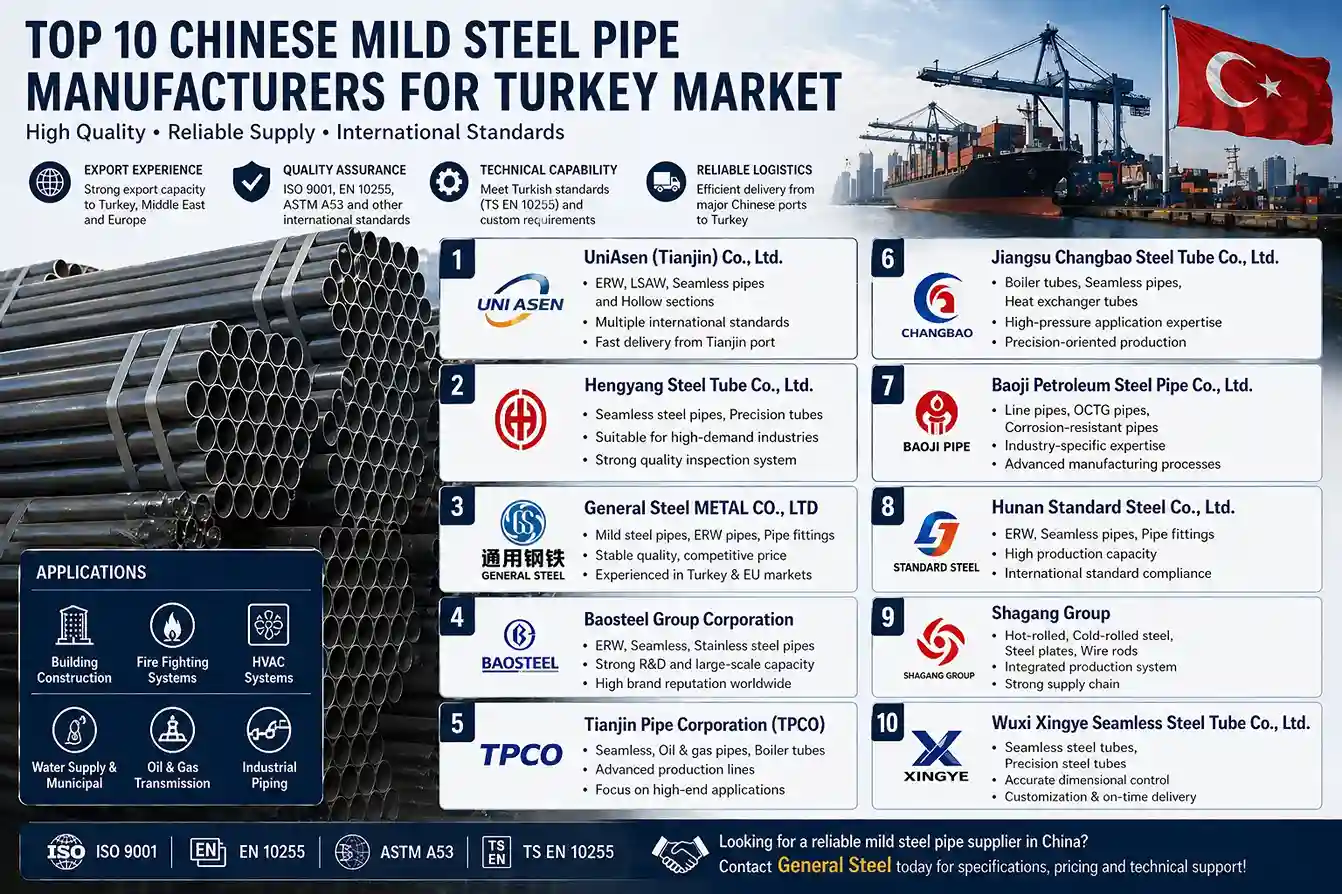
Carbon steel pipes are among the most widely used steel products in industrial applications due to their high strength, pressure resistance, cost-effectiveness, and versatility. Understanding carbon steel pipe specifications is essential for selecting the right pipe for pipelines, construction, high-temperature service, or mechanical systems.
This guide provides a complete technical overview of carbon steel pipe specifications, standards, grades, dimensions, manufacturing methods, coatings, and applications—helping engineers, buyers, and project managers make informed decisions.
What Is Carbon Steel Pipe?
Carbon steel pipe (CS pipe) is manufactured from steel ingots or solid round billets, which are perforated into hollow tubes and then hot-rolled, cold-rolled, or cold-drawn. The primary alloying element is carbon, typically ranging from 0.05% to 2.0%, giving the pipe excellent mechanical strength and pressure-bearing capability.
Due to these properties, carbon steel pipes are widely used in:
Oil & gas transmission
Construction and infrastructure
Boilers and heat exchangers
Mechanical and chemical equipment
Key Carbon Steel Pipe Specifications Overview
Carbon steel pipe specifications define a pipe’s performance, pressure rating, and application suitability. The main specification areas include:
Standards & Grades (ASTM / API)
Dimensions & Schedules (ASME B36.10M)
Manufacturing Method
Material Properties
End Finishes & Coatings
1. Carbon Steel Pipe Standards & Grades
| Standard | Description | Typical Application |
|---|---|---|
| ASTM A53 | Black & galvanized carbon steel pipe | General-purpose piping |
| ASTM A106 | Seamless pipe for high-temperature service | Boilers, refineries |
| ASTM A335 | Alloy steel pipe (high temp/pressure) | Power plants |
| API 5L | Line pipe for oil & gas pipelines | Onshore & offshore pipelines |
Common Grades
ASTM A53: Grade A, Grade B
ASTM A106: Grade A, B, C
API 5L: Grade B, X42 – X70
🔍 ASTM A53 is typically used for general-purpose piping, while ASTM A106 Gr. B is preferred for high-temperature and high-pressure environments.
2. Dimensions & Schedules (ASME B36.10M)
Carbon steel pipe dimensions are governed by ASME B36.10M, ensuring global standardization.
Key Dimensional Parameters
Nominal Pipe Size (NPS): 1/2″, 2″, 6″, 12″, etc.
Schedule (SCH): Wall thickness classification
Common: Sch 40, Sch 80
Heavy duty: Sch 160, XXS
Outside Diameter (OD): Constant for a given NPS
Wall Thickness: Increases with higher schedule
Inside Diameter (ID): Changes based on schedule
Higher schedule = thicker wall = higher pressure capacity.
3. Manufacturing Methods of Carbon Steel Pipes
Seamless Carbon Steel Pipe (SMLS)
Manufactured from solid billets
No weld seam
Excellent for high pressure & high temperature
Common standards: ASTM A106, ASTM A333
Welded Carbon Steel Pipe
Made from rolled steel plates or coils
Types:
ERW (Electric Resistance Welded)
LSAW (Longitudinal Submerged Arc Welded)
HSAW (Helical Submerged Arc Welded)
Welded pipes are cost-effective and widely used in low-to-medium pressure systems.
4. Material Properties of Carbon Steel Pipe
Chemical Composition (By Carbon Content)
| Carbon Steel Type | Carbon Content |
|---|---|
| Ultra-low carbon | 0.05 – 0.15% |
| Low carbon steel | 0.16 – 0.29% |
| Medium carbon steel | 0.30 – 0.59% |
| High carbon steel | 0.60 – 0.99% |
| Ultra-high carbon | 1.00 – 2.00% |
Mechanical Properties
Tensile Strength
Yield Strength
Toughness
Pressure Resistance
Common low-carbon grades include Q195, Q215, Q235, offering excellent weldability and ductility.
5. End Finishes & Surface Coatings
End Finishes
Plain End (PE)
Beveled End (BE) – for welding
Threaded End (TE)
Common Coatings
Black (Bare)
Hot-Dip Galvanized (Zinc Coating)
FBE (Fusion Bonded Epoxy)
3PE (Three-Layer Polyethylene)
Coatings improve corrosion resistance and extend service life, especially for buried or offshore pipelines.


Example Carbon Steel Pipe Specification Breakdown
“ASTM A106 Gr. B Sch 40 6-inch Seamless Carbon Steel Pipe”
Standard: ASTM A106
Grade: Gr. B
Size: 6″ NPS
Schedule: Sch 40
Manufacturing: Seamless
Application: High-temperature & pressure systems
Carbon Steel Pipe Specs & Standards Table
| Product Name | Standard | Size Range (mm) | Grade |
|---|---|---|---|
| Black & Galvanized Seamless Pipe | ASTM A53 | 0.3–1200 × 1.0–150 | Gr.A / Gr.B |
| High-Temp Seamless CS Pipe | ASTM A106 | 10.3–1200 × 1.0–150 | Gr.B / Gr.C |
| Boiler & Heat Exchanger Tube | ASTM A192 | 10.3–426 × 1.0–36 | Low Carbon |
| Mechanical Tubing | ASTM A333 | 1/4″–42″ | Gr.1 / Gr.6 |
Advantages of Carbon Steel Pipes
High Strength & Durability
Excellent Pressure Resistance
Cost-Effective Compared to Alloy Steel
Easy Fabrication & Welding
100% Recyclable & Environmentally Friendly
Applications of Carbon Steel Pipes
Oil & Gas Industry: Transmission pipelines
Construction: Bridges, buildings, tunnels
Automotive Industry: Exhaust systems, chassis
Mechanical Engineering: Hydraulic & pressure systems
Chemical Industry: Reactors, tanks, piping systems
Carbon Steel Pipe vs. Black Steel Pipe
Black steel pipe is carbon steel with an iron oxide surface layer
Commonly used for gas transmission, fire protection systems
Not suitable for drinking water due to regulations
Frequently Asked Questions (FAQ)
What is carbon steel?
Carbon steel is an iron–carbon alloy containing minimal alloying elements, offering high strength and affordability.
What is carbon steel pipe used for?
It is used to transport liquids, gas, steam, and oil in industrial, mechanical, and construction applications.
What is carbon steel made of?
Carbon steel is primarily made of iron and carbon (0.12%–2.0%), with trace elements to enhance performance.
Conclusion
Carbon steel pipe specifications play a critical role in determining performance, safety, and service life. By understanding standards such as ASTM A53, ASTM A106, API 5L, along with schedules, grades, and coatings, buyers can confidently select the right pipe for their project.
Solitaire Overseas supplies a comprehensive range of seamless and welded carbon steel pipes, manufactured to international standards and suitable for diverse industrial applications—ensuring reliability, efficiency, and long-term value.